Why Laptop and Phone Prices Are Rising (And What You Can Do About It)
If you’ve priced laptops, phones or IT hardware recently, you’ve likely noticed two things:
- Prices are noticeably higher than they were even 6-12 months ago
- Availability and lead times are less predictable
This isn’t a short-term spike. It reflects a wider shift in how technology is being used globally.
What’s Driving These Changes?
The biggest driver is AI.
AI data centres require far more memory than traditional systems and are now consuming a significant, previously unforecasted share of global demand.
At the same time:
- Memory production is concentrated among a small number of manufacturers
- Manufacturers are prioritising high-performance memory for AI workloads
- Capacity cannot be increased quickly
Put simply: Supply cannot keep up with demand
And this is now affecting more than just RAM.
As production is redirected, availability is reduced across other key components, such as SSD storage and graphics memory.
These are essential parts of all modern devices, which means the increase in component costs is now feeding directly into the price of:
- Laptops
- Desktops
- Servers
- Smartphones
- Tablets and other everyday devices
What This Means For Pricing
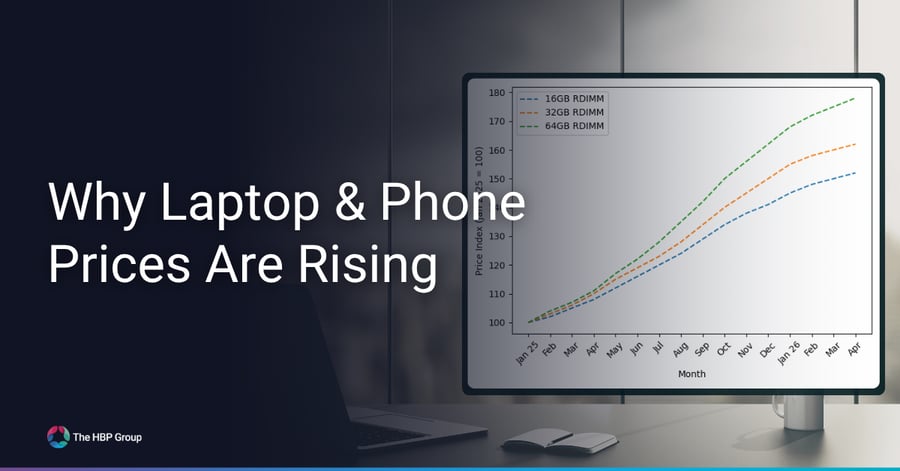
Memory prices have increased significantly over the past 12 months, in many cases by over 80%.
The graph below shows how server-grade memory prices have increased over the past 12-15 months, with higher-capacity memory seeing the sharpest rises.

This is now feeding directly into device costs:
- Laptop manufacturers are expecting price increases of 15–30%
- Higher-spec devices (32GB+ memory) are seeing the biggest increases
- Lower-cost devices are becoming more limited in availability
Some of these increases have been delayed by existing stock, but as that is used up, pricing pressure is continuing to build.
This isn’t expected to correct quickly, with prices more likely to remain at current levels or increase further before stabilising over the next 12-24 months.
How The HBP Group Is Adapting To This
Because of this, we’ve had to adapt how we quote and supply hardware:
- Laptop quotes are valid for up to 7 days
- Laptop stock availability may change week to week
- Server quote validity will be confirmed at the time of quoting by your account manager, but is typically between 48 and 72 hours
- Quotes may need to be reissued if delayed
What You Can Do
If you take one thing from this, it’s this: Planning ahead matters more than ever.
In practice, that means:
- Budget for higher hardware costs than previous years
- Plan hardware purchases 3-6 months earlier
- Bring forward known purchases where possible
- Speak to us early to secure pricing
- Review SaaS or cloud options if they were already being considered
Final Thought
This can feel frustrating, as much like other market-driven price changes, such a fuel prices going up, it is largely outside of anyone’s control and there is very little we can do about it.
However, the businesses that manage this best are the ones that plan ahead, budget appropriately, and avoid being forced into reactive decisions.
If you’d like help reviewing your upcoming hardware needs or timelines, speak to our team - we can help you understand what needs to happen now and what can wait.


.png?width=100&name=HBP%20Gradient%20Bar%20(210mm).png)

 info@thehbpgroup.co.uk
 01482 423910


.png?width=2484&height=10&name=HBP%20Gradient%20Bar%20(210mm).png)