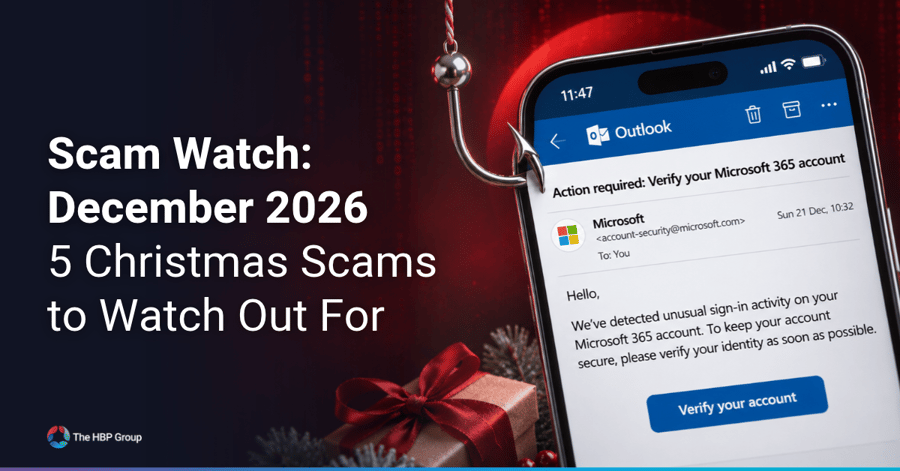
The biggest Christmas scams to watch out for in December 2026 include fake online shopping websites, fraudulent parcel delivery messages, Amazon impersonation, fake mobile phone upgrade offers and year-end payment scams targeting businesses.
Cybercriminals take advantage of the festive season by exploiting increased online shopping, limited-time offers, expected deliveries and additional pressures on employees and finance teams.
Recent figures highlight the scale of the problem:
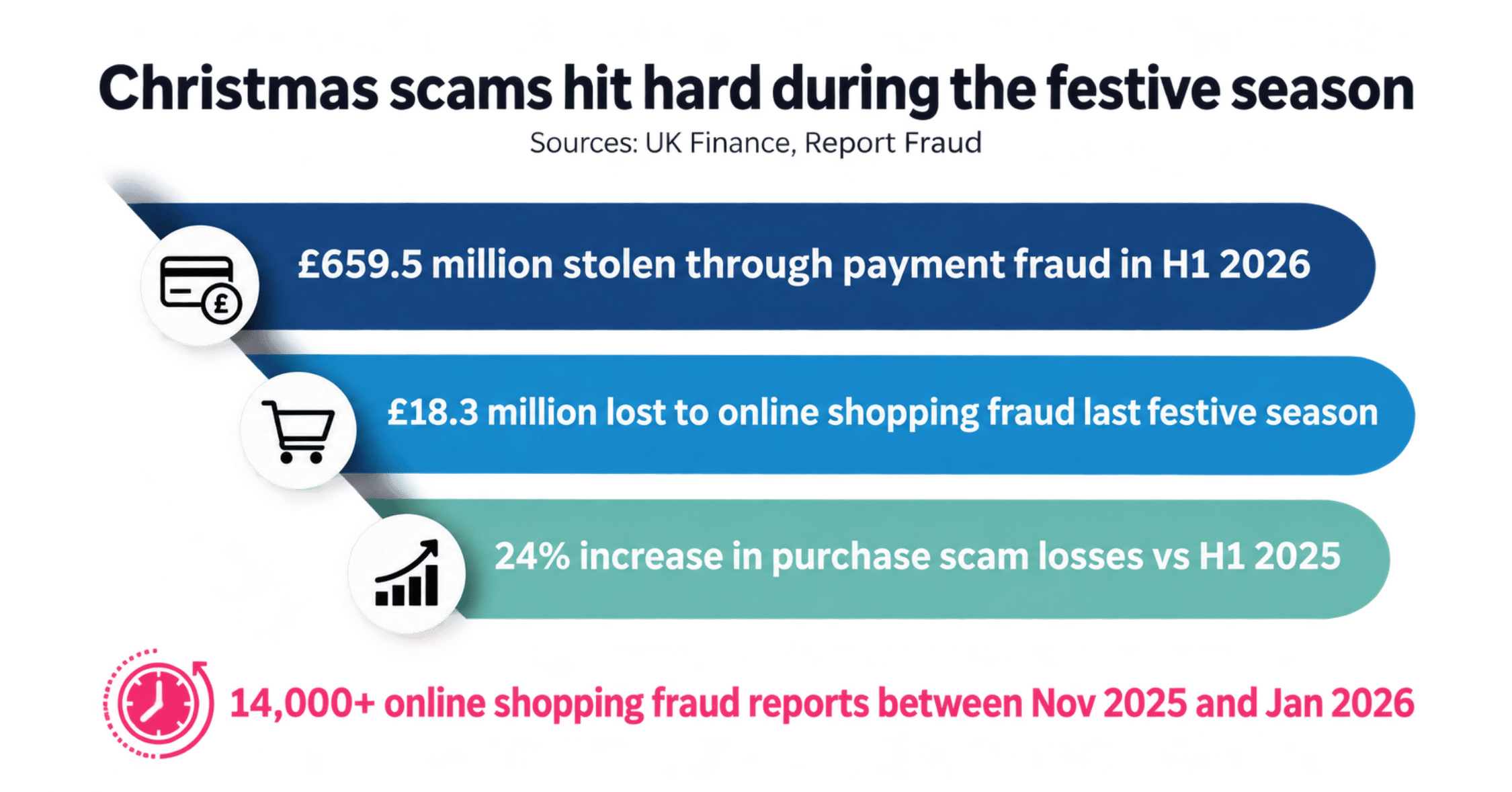
- £659.5 million was stolen through payment fraud in the first half of 2026, an 8% increase compared with the same period in 2025, according to UK Finance.
- £18.3 million was lost to reported online shopping fraud during the previous festive season, with more than 14,000 reports received between November 2025 and January 2026, according to Report Fraud.
- 24% increase in purchase scam losses during the first half of 2026 compared with the same period in 2025.
What makes these scams particularly effective at Christmas is that the requests often appear entirely reasonable given the time of year.
A parcel requiring redelivery, a heavily discounted product or an urgent payment before the Christmas break may not immediately raise suspicion.
In this month's Scam Watch, we explore five key threats to be aware of this December, how cybercriminals are exploiting the festive period and what individuals and organisations should be doing to protect themselves.
What To Do If You Receive a Suspicious Message
The safest response to any unexpected or unusual request remains consistent:
- Mark suspicious messages as phishing or spam
- Do not click links or download attachments
- Do not reply or engage with the sender
- Do not forward suspicious messages internally for second opinions
- Independently verify requests using a trusted contact method
- Report suspicious activity involving work accounts or devices to your IT Service Desk
During the festive period, it is particularly important not to let urgency, convenience or familiarity override your usual security checks.
Here are the top Five Scams to Watch Out For this Christmas:
1. Fake Online Shopping Websites (When a Christmas Bargain Becomes a Costly Mistake)
With Black Friday, Cyber Monday, Christmas shopping and Boxing Day sales, December presents significant opportunities for criminals to exploit online shoppers.
On 23 November 2026, Report Fraud launched its festive fraud awareness campaign following more than £18 million in reported online shopping fraud losses during the previous festive season.
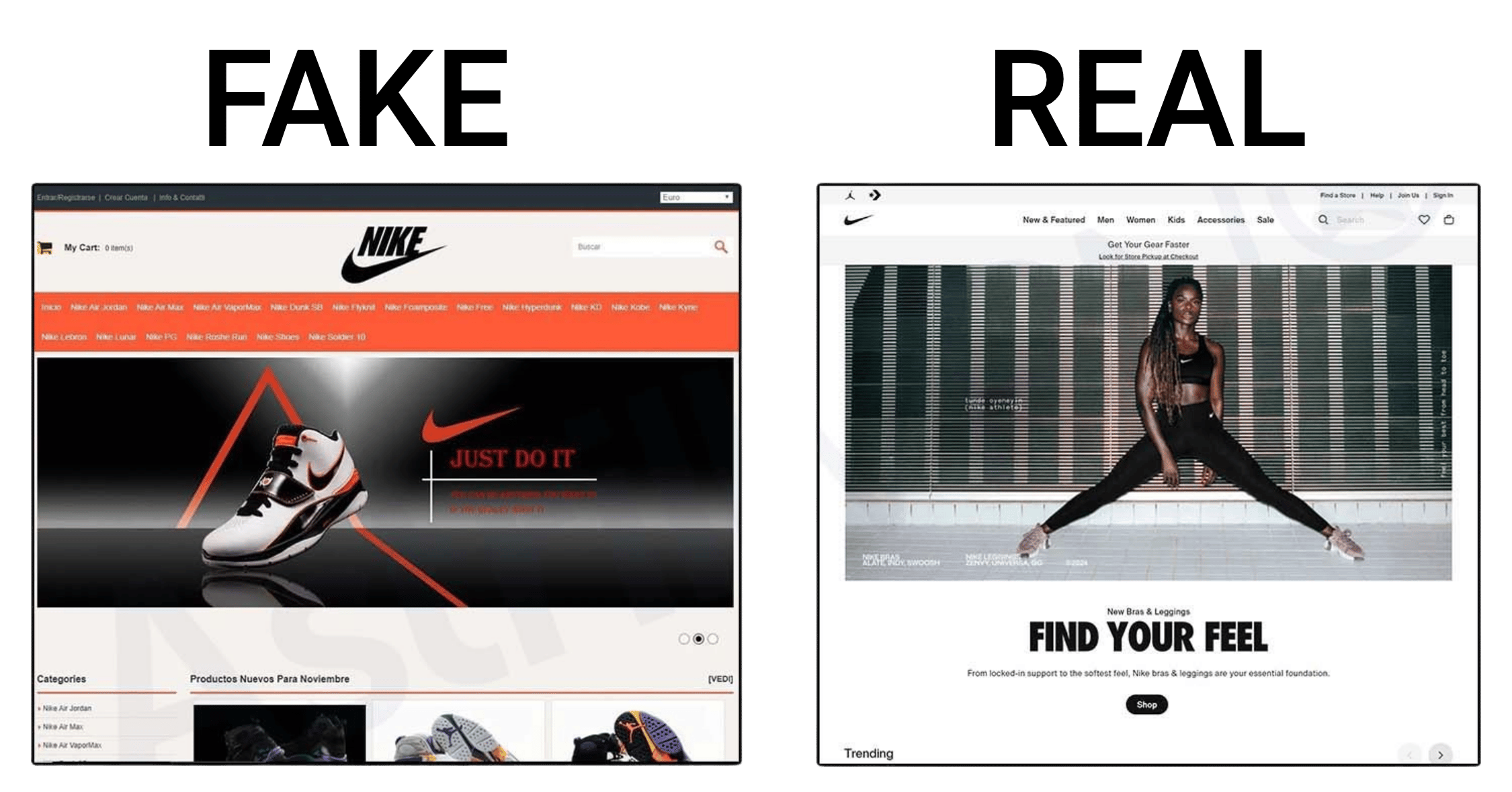
Attackers are using fraudulent websites, social media advertisements and marketplace listings to promote heavily discounted products, often impersonating well-known retailers or advertising popular Christmas gifts.
These websites can appear highly professional, featuring familiar branding, customer reviews, product photography and convincing checkout pages.
The aim is to make the purchase feel legitimate while encouraging shoppers to act before the supposed offer expires.
What this attack is trying to achieve:
Rather than simply selling counterfeit products, these scams can be designed to capture sensitive information or steal money directly.
This often leads to:
- Payments for products that never arrive
- Theft of personal and financial information
- Compromised account credentials
- Further fraudulent transactions using stolen payment details
What to watch for:
- Discounts that are significantly lower than other retailers
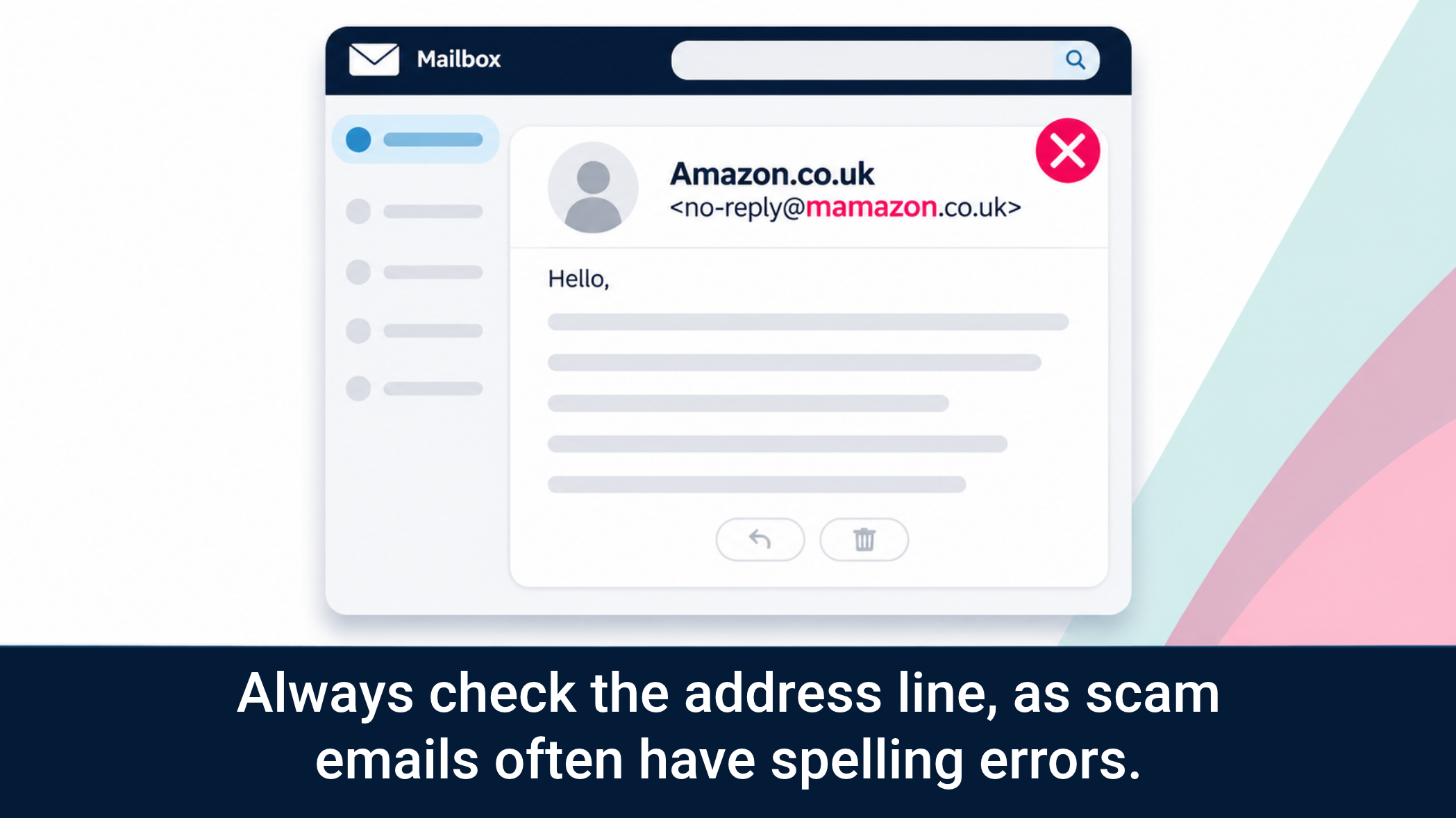
- Websites with addresses that closely resemble legitimate brands
- Countdown timers and messages creating pressure to purchase immediately
- Social media sellers requesting payment outside the platform
- Retailers insisting on payment via bank transfer
Our recommendation:
- Access retailer websites directly rather than following unfamiliar advertising links
- Independently research retailers before making a purchase
- Use secure payment methods that offer appropriate purchase protection
- Do not reuse passwords across shopping and work accounts
- Remember that professional website design and a padlock symbol do not prove a retailer is legitimate
2. Parcel Delivery Scams (Exploiting the Christmas Delivery Rush)
Parcel delivery scams are particularly effective during December, when individuals and businesses are expecting multiple deliveries.
On 26 November 2026, Ofcom identified fraudulent parcel delivery messages as one of the key scams to watch out for this Christmas.
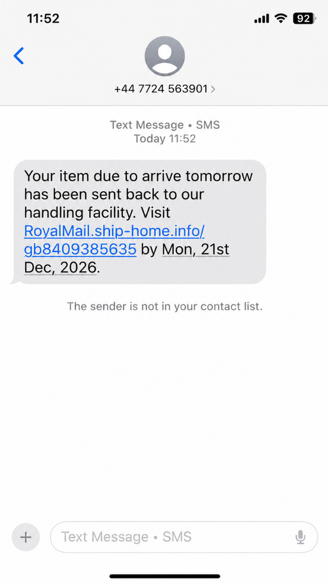
Attackers impersonate delivery companies such as Royal Mail, Evri and DHL, sending text messages or emails claiming that a parcel could not be delivered or that additional information is required.
These messages often request a small payment to rearrange delivery, confirm an address or release a parcel.
The amount requested may appear insignificant, but the payment itself is not necessarily the primary objective.
What this attack is trying to achieve:
The aim is to exploit the expectation of a genuine delivery and direct recipients towards fraudulent websites.
This often leads to:
- Capturing debit or credit card details
- Collecting personal information
- Unauthorised financial transactions
- Further impersonation attempts using stolen information
What to watch for:
- Unexpected messages claiming a delivery has failed
- Requests to pay a small redelivery or outstanding delivery fee
- Messages threatening to return a parcel unless immediate action is taken
- Links requesting payment information or personal details
Our recommendation:
- Do not make payments through unexpected delivery messages
- Check parcel tracking directly through the official courier website or application
- Verify delivery notifications against your original order confirmation
- Treat unexpected delivery messages as unverified, even if you are expecting a parcel
- Report suspicious text messages by forwarding them to 7726
3. Amazon Impersonation Scams (The Fraudulent Purchase That Never Happened)
As online shopping increases over Christmas, criminals are also exploiting concerns around unauthorised purchases.
On 30 October 2026, Report Fraud issued a warning about an emerging Amazon impersonation scam, with £86,837 stolen in just nine days.
Attackers contact individuals claiming that suspicious activity has been identified on their Amazon account.
This may involve an expensive item being ordered, gift cards being purchased or products being sent to an unfamiliar delivery address.
The recipient is then encouraged to take immediate action to cancel the transaction or secure their account.
However, the suspicious purchase may never have happened.
The fraud warning itself is the scam.
What this attack is trying to achieve:
By creating concern about financial loss, attackers attempt to persuade individuals to follow instructions that they would not normally consider.
This often leads to:
- Installing remote access or screen-sharing software
- Sharing account credentials or security codes
- Providing access to devices or online banking
- Authorising fraudulent payments
What to watch for:
- Unexpected calls or messages about purchases you do not recognise
- Requests to install software to cancel an order or secure an account
- Instructions to transfer money or authorise payments
- Requests for passwords or one-time security codes
- Pressure to remain on a phone call while an issue is resolved
Our recommendation:
- Do not engage with unexpected calls claiming to identify fraudulent purchases
- Access your Amazon account directly to verify order history
- Never grant remote access to your device following an unsolicited call
- Do not share passwords or one-time security codes
- Report any suspected compromise involving a work device to your IT Service Desk immediately
Amazon also have a dedicated webpage to help identify a scam, where you can also verify a call or message you have received, or report a scam: Identifying a scam - Amazon Customer Service
4. Fake Mobile Phone Upgrade Offers (When a Festive Discount Puts Your Account at Risk)
Mobile phone providers regularly promote new devices, contract upgrades and discounted packages throughout the festive period.
Cybercriminals are using these genuine promotional activities as an opportunity to impersonate trusted mobile network providers.
On 25 November 2026, the Home Office highlighted a significant increase in mobile provider impersonation fraud.
Figures from Cifas identified more than 15,000 cases in 2026 at the time of the announcement, an 85% increase compared with 2025, with estimated losses exceeding £32 million.
Attackers contact individuals by phone, email or text message, offering discounted handsets, reduced monthly payments or exclusive Christmas upgrades.
To access the supposed offer, recipients may be asked to verify their identity, provide account details or share security codes.
What this attack is trying to achieve:
These attacks exploit existing relationships with trusted mobile network providers to gain access to sensitive information and accounts.
This often leads to:
- Theft of personal and financial information
- Compromised mobile network accounts
- Fraudulent purchases or contracts
- Unauthorised access to account information
For organisations, mobile device security is particularly important because employees often use their phones to access business emails, cloud applications and multi-factor authentication services.
What to watch for:
- Unexpected calls offering significant contract discounts
- Exclusive offers that must be accepted immediately
- Requests for account passwords or one-time security codes
- Links directing you to unfamiliar account verification pages
- Requests to share your mobile phone screen
Our recommendation:
- End unexpected sales calls and contact your provider independently
- Check available offers through your provider's official website or application
- Never share one-time passwords or authentication codes with unsolicited callers
- Treat unexpected upgrade offers as unverified, even if the caller knows your personal details
- Report suspected compromises involving business mobile devices to your IT Service Desk
5. Year-End Payment and Gift Card Scams (Exploiting Christmas Closures and Staff Absences)
The festive period can create additional security risks for organisations.
With employees taking annual leave, finance teams processing outstanding invoices and businesses preparing for Christmas closures, there may be increased pressure to complete tasks before the break.
Cybercriminals can exploit these circumstances by impersonating senior members of staff, suppliers or other trusted business contacts.
In September 2026, Report Fraud revealed that criminals had stolen more than £101 million through payment diversion fraud during the 2025/26 financial year.
During the festive period, these impersonation attempts may be presented as requests to settle outstanding invoices, purchase Christmas gift cards for employees, update supplier bank details or process urgent payments before the office closes.
The request may appear to come from a genuine internal or supplier email account, particularly where an account has already been compromised.
What this attack is trying to achieve:
These attacks are designed to exploit trusted business relationships and encourage employees to bypass established financial procedures.
This often leads to:
- Payments being transferred to fraudulent bank accounts
- Employees purchasing gift cards on behalf of impersonated colleagues
- Unauthorised changes to supplier payment details
- Sensitive financial or business information being disclosed
What to watch for:
- Unexpected requests from directors or senior members of staff
- Requests to process payments before the Christmas break
- Supplier invoices containing new or amended bank details
- Requests to purchase gift cards and share redemption codes
- Messages encouraging confidentiality or bypassing normal approval procedures
- Requests that cannot be easily verified because a colleague is on annual leave
Our recommendation:
- Independently verify all requests to change supplier bank details
- Maintain normal payment approval processes throughout the festive period
- Confirm unusual financial requests using a known telephone number or separate trusted communication channel
- Ensure employees covering for colleagues understand financial approval and security procedures
- Report suspected impersonation attempts to your IT Service Desk immediately
Why Christmas Makes These Scams More Effective
Across these examples, the pattern is consistent.
Cybercriminals are not necessarily developing entirely new methods of attack. They are adapting existing techniques to reflect what individuals and organisations are expecting to see during the festive period.
A delivery notification feels more believable when you are waiting for Christmas presents.
A discounted product feels more legitimate during a seasonal sale.
An urgent payment request feels more reasonable when the business is preparing to close for Christmas.
In each case, the attacker is relying on context, familiarity and urgency to reduce the likelihood of independent verification.
For organisations, the focus should remain consistent throughout the festive period:
- Do not allow seasonal pressures to override established security procedures
- Ensure employees know how to recognise and report suspicious activity
- Independently verify unexpected requests involving money, credentials or access
- Maintain appropriate security and financial controls, even when key members of staff are away
If you believe you have fallen victim to a scam, contact your bank immediately where financial information or payments are involved. Fraud can also be reported through Report Fraud or, in Scotland, through Police Scotland.
Christmas may change the context of a scam, but it should never change how you verify a request.
If you want to discuss how your organisation is protecting its employees, systems and data against these types of threats, we can help.
[INSERT HBP GROUP CTA]




 info@thehbpgroup.co.uk
 01482 423910