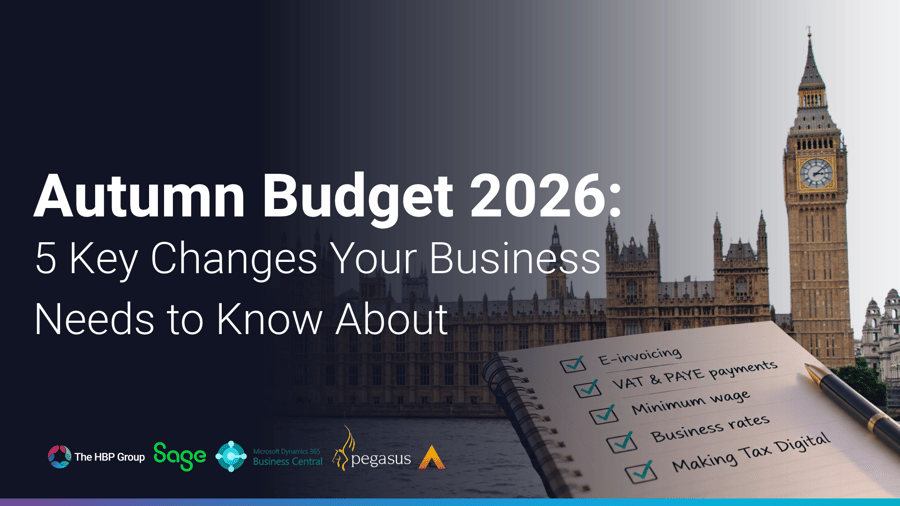
The Autumn Budget was announced on 28th October 2026, bringing a number of changes that UK businesses will need to be aware of over the coming months and years.
While much of the attention has been on the wider economy and household finances, there were also some important announcements affecting how businesses manage their finances, process invoices, handle tax payments and plan for the future.
We've taken a closer look at five of the key changes that we think are worth keeping on your radar, particularly if you're responsible for your company's finances or accounting systems.
1. Mandatory E-Invoicing Is Getting Closer
One of the most significant developments for finance teams is the government's continued move towards mandatory electronic invoicing.
From 1st April 2029, businesses within the scope of the new requirements will need to issue and receive VAT invoices in a specified electronic format.
Although this was originally announced in 2025, the latest Budget included a new implementation roadmap, providing more information about how businesses will be expected to prepare.
Importantly, e-invoicing isn't simply about emailing a PDF invoice. It involves exchanging invoice information in a structured digital format that compatible systems can process automatically.
What does this mean for your business?
If your business currently relies on manually creating, sending or processing invoices, it's worth starting to think about how your existing accounting software will accommodate these changes.
The government plans to confirm the detailed requirements by April 2028, giving affected businesses and software providers time to prepare ahead of the 2029 deadline.
There's no need to make immediate changes, but it's certainly one to keep an eye on.
2. Changes Are Coming to VAT and PAYE Payments
Another announcement worth knowing about concerns how businesses pay their VAT and PAYE liabilities.
From April 2029, the government plans to introduce mandatory Direct Debit arrangements for these payments.
Under the proposals, businesses will still be able to make payments using other methods before a specified cut-off date. However, a Direct Debit arrangement will need to be in place so HMRC can collect any remaining unpaid balance.
The planned introduction dates are:
- 1st April 2029 for VAT liabilities.
- 6th April 2029 for PAYE liabilities.
What does this mean for your business?
For many finance teams, this may simply mean reviewing how tax payments are currently managed.
If your business relies on manual bank transfers or other payment methods, you'll need to make sure the necessary arrangements are in place before the new requirements take effect.
It's also worth reviewing your internal processes for monitoring upcoming tax liabilities and managing cash flow.
3. National Minimum Wage Rates Are Increasing
The Budget also confirmed increases to the National Living Wage and National Minimum Wage, which will take effect from 1st April 2027.
The new hourly rates will be:
| Age group | New hourly rate |
|---|---|
| Aged 21 and over | £13.21 |
| Aged 18–20 | £11.27 |
| Aged 16–17 | £8.31 |
| Eligible apprentices | £8.31 |
These changes represent a 3.9% increase across the main wage rates.
What does this mean for your business?
If you employ staff who are paid at or close to the minimum wage, it's important to factor these increases into your payroll costs and financial forecasts.
You'll also need to make sure your payroll processes and systems are updated in time for April 2027.
Even if your employees earn above the minimum wage, the changes may be worth considering when reviewing salary structures and future staffing budgets.
4. Business Rates Changes Could Benefit Some Businesses
There was also some potentially welcome news for businesses operating in the retail, hospitality and leisure sectors.
From April 2027, the government is increasing the Small Business Rates Relief thresholds for qualifying properties in England.
The new thresholds will be:
- 100% relief: Rateable value threshold increasing from £12,000 to £18,000.
- Tapered relief: Upper rateable value threshold increasing from £15,000 to £21,000.
The government also announced measures to limit business rates increases for qualifying retail, hospitality and leisure properties over the following two years.
What does this mean for your business?
If you operate from qualifying premises, it's worth reviewing whether the changes could affect your business rates bill.
Not every business will qualify, and the amount of relief available will depend on your individual circumstances.
However, for those that do benefit, the changes could help reduce overheads and provide some additional breathing room when planning future expenditure.
5. Further Changes to Making Tax Digital
The government's ongoing move towards digital tax reporting also featured in the Budget.
For those joining Making Tax Digital for Income Tax in April 2027, HMRC has announced a temporary relaxation of late-submission penalties.
Taxpayers joining at that point won't receive penalty points for late submission of their first four quarterly updates during the 2027–28 tax year.
The government has also confirmed that the rollout will be deferred for certain taxpayer groups, with further details available through HMRC.
What does this mean for your business?
Although Making Tax Digital for Income Tax primarily affects self-employed individuals and landlords within the relevant thresholds, the announcement reinforces the wider move towards digital financial record-keeping and reporting.
It's another reminder of why it's important to understand how your accounting processes and software support changing tax requirements.
If you're unsure whether these particular requirements apply to you, it's worth speaking with your accountant or tax adviser.
What Should Your Business Be Doing Now?
The good news is that many of these changes won't take effect immediately, so there's time to prepare.
However, there are a few practical things worth considering:
- Review your invoicing processes: Understand how invoices are currently created, exchanged and processed, particularly ahead of the 2029 e-invoicing requirements.
- Check your payroll arrangements: Make sure you're prepared for the new minimum wage rates in April 2027.
- Keep an eye on tax payment processes: Be aware of the upcoming VAT and PAYE Direct Debit requirements.
- Review your financial forecasts: Consider whether wage increases or business rates changes could affect your future costs.
- Stay informed: Keep track of further government guidance as the details of upcoming requirements are confirmed.
You don't necessarily need to change how you're working today, but understanding what's coming can help avoid unnecessary challenges further down the line.
Need Help Understanding What This Means for Your Accounting Software?
At The HBP Group, we understand how important it is for businesses to have accounting and financial systems that support their everyday operations while keeping up with changing requirements.
Whether you're using Microsoft Dynamics 365 Business Central, Sage 200, Pegasus Opera 3 or Exchequer, our team is here to help you understand how developments in accounting technology and legislation could affect the way you work.
If you've got any questions about your current setup, or you'd simply like some advice on preparing for future changes, we're always happy to help.
Please note: This article is intended as general information based on the Autumn Budget 2026 announcements. Some proposals remain subject to legislation or further guidance. For advice on how specific tax changes affect your business, we recommend speaking with your accountant or tax adviser.

Posted by The HBP Group
Written by experts across the business, The HBP Group blog covers cybersecurity, IT best practice, Microsoft solutions, ERP systems, and technology strategy—helping organisations reduce risk, improve performance, and make smarter IT decisions.



 info@thehbpgroup.co.uk
 01482 423910